Improving product design is a critical aspect of enhancing user experience, fostering innovation, and staying competitive in the market. Midjourney, a hypothetical tool or methodology, can be instrumental in this process. Here’s a comprehensive guide on how to leverage Midjourney to enhance product design.
Understanding Midjourney in Product Design
Midjourney is envisioned as a comprehensive approach or tool designed to streamline the product design process. It integrates various aspects like user research, design thinking, prototyping, and feedback mechanisms.
Core Principles of Midjourney
Expanding on the core principles of Midjourney in product design, we delve deeper into what each principle entails and how they contribute to the success and effectiveness of the product development process.
1. User-Centric Design
- Understanding the User: This involves in-depth research to understand the target audience’s needs, preferences, behaviors, and pain points. Tools like personas, user stories, and empathy maps are commonly used.
- Design for Usability: The focus here is on creating products that are not just aesthetically pleasing but also easy and intuitive to use. This includes considering aspects like user interface (UI) and user experience (UX) design.
- Continuous User Feedback: Incorporating feedback mechanisms throughout the design process to ensure that the product aligns with user expectations and solves real problems.
2. Iterative Process
- Prototyping: Developing multiple iterations of prototypes to explore different design solutions. This can range from low-fidelity sketches to high-fidelity interactive models.
- Testing and Validation: Each prototype undergoes rigorous testing to validate assumptions, with a focus on usability testing, A/B testing, and functionality checks.
- Learning and Refining: Learning from each iteration’s outcomes to refine the product. This principle acknowledges that the first design is rarely the final one and that improvement is a continuous process.
3. Collaborative Efforts
- Cross-functional teams: Encouraging collaboration between different departments such as design, engineering, marketing, and sales to bring diverse perspectives to the table.
- Stakeholder Engagement: Involving stakeholders, including customers, clients, and end-users, in the design process to ensure their needs and expectations are met.
- Communication and Transparency: Maintaining open communication channels and transparency throughout the project to ensure alignment and facilitate effective collaboration.
4. Innovation and Creativity
- Fostering a Creative Environment: Creating a workplace culture that encourages risk-taking, experimentation, and out-of-the-box thinking.
- Utilizing Design Thinking: Applying design thinking principles, which emphasize empathy, ideation, and experimentation, to solve complex problems in innovative ways.
- Leveraging Technology and Trends: Staying abreast of the latest technological advancements and design trends to incorporate cutting-edge solutions in product design.
These core principles of Midjourney emphasize a holistic and dynamic approach to product design. By focusing on user needs, embracing an iterative approach, promoting teamwork, and encouraging innovation, organizations can develop products that not only meet market demands but also offer exceptional user experiences and drive business success.
Implementing Midjourney in the Design Process
Stage 1: Research and Analysis
- Market Analysis: Understanding current trends, competitor products, and market demands.
- User Research: Conducting surveys, interviews, and ethnographic studies to gather user insights.
Stage 2: Ideation and Conceptualization
- Brainstorming Sessions: Utilizing creative techniques to generate a wide range of ideas.
- Concept Selection: Evaluating and selecting the most viable ideas for further development.
Stage 3: Prototyping and Testing
- Rapid Prototyping: Creating quick and cost-effective prototypes to visualize ideas.
- User Testing: Gathering user feedback on prototypes to identify strengths and weaknesses.
Stage 4: Refinement and Finalization
- Iterative Refinement: Making necessary modifications based on user feedback and testing results.
- Final Design Development: Finalizing the design that meets both user needs and business objectives.
Tools and Technologies Supporting Midjourney
- Digital Design Tools: Software like Adobe XD, Sketch, or Figma for creating and iterating design prototypes.
- Collaboration Platforms: Tools like Slack or Microsoft Teams to enhance team communication and collaboration.
- User Testing Software: Platforms like UserTesting or Lookback.io for gathering real-time user feedback.
Challenges and Solutions in Midjourney
Common Challenges
- Balancing Creativity and Practicality: Ensuring innovative designs are also feasible and practical.
- Managing Diverse Stakeholder Interests: Aligning the interests of different stakeholders with the design objectives.
Overcoming Challenges
- Effective Communication: Establishing clear channels of communication among all parties involved.
- Flexibility and Adaptability: Being open to change and adaptable to new information or feedback.
Examples of using Midjourney in product designing
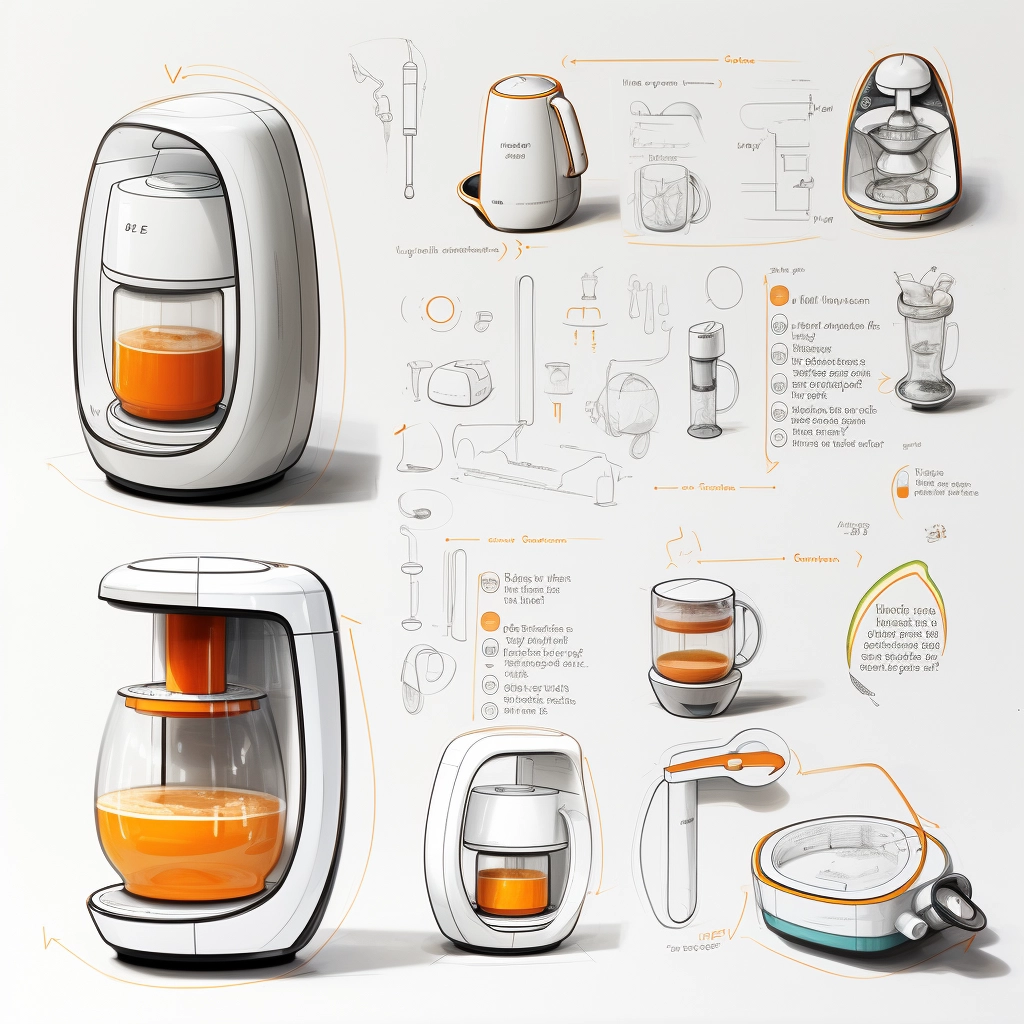
1. Prompt: Product design, pencil sketch, concept art, juicer product, industrial design facial recognition, interactive touch screen, voice interaction matte plastic and metal material cool color palette minimalism, circle style hand drew graphite and gray lines, white Background Accurate Home Details Emotional Product Design Multiple Views of Smart Products Interactive On-Screen Digital Emotional Icons Pale Overall Tone Full Annotation Details for Components
Result:
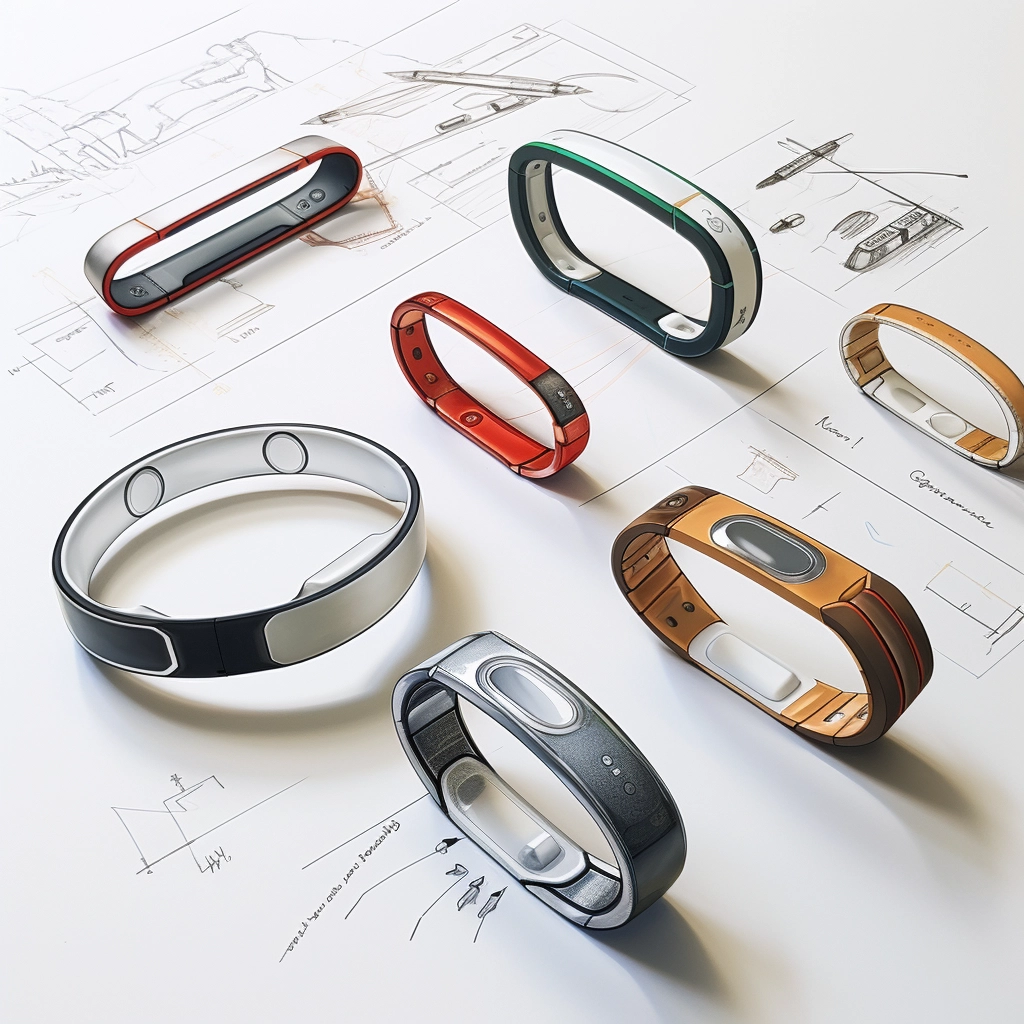
2. Prompt: Consumer electronics design, hand band design sketch in a different perspective, hand band with magnet connection and silicon band, flat surface screen, design sketches with only line drawing in white paper with no shadow, design ideation sketches, no color, line art only
Result:
3. Prompt: The product design concept of a baby stroller designed in a modern Argentinian Gaucho cultural style with Andean and Indigenous Influences, it has a zippered protective canopy and sides lined with a layer of radiation-blocking material, the Stroller Frame is made of Eucalyptus Wood, the Protective Canopy is made of Organic cotton interwoven with a Sheet of soft and dense Lead
Result: 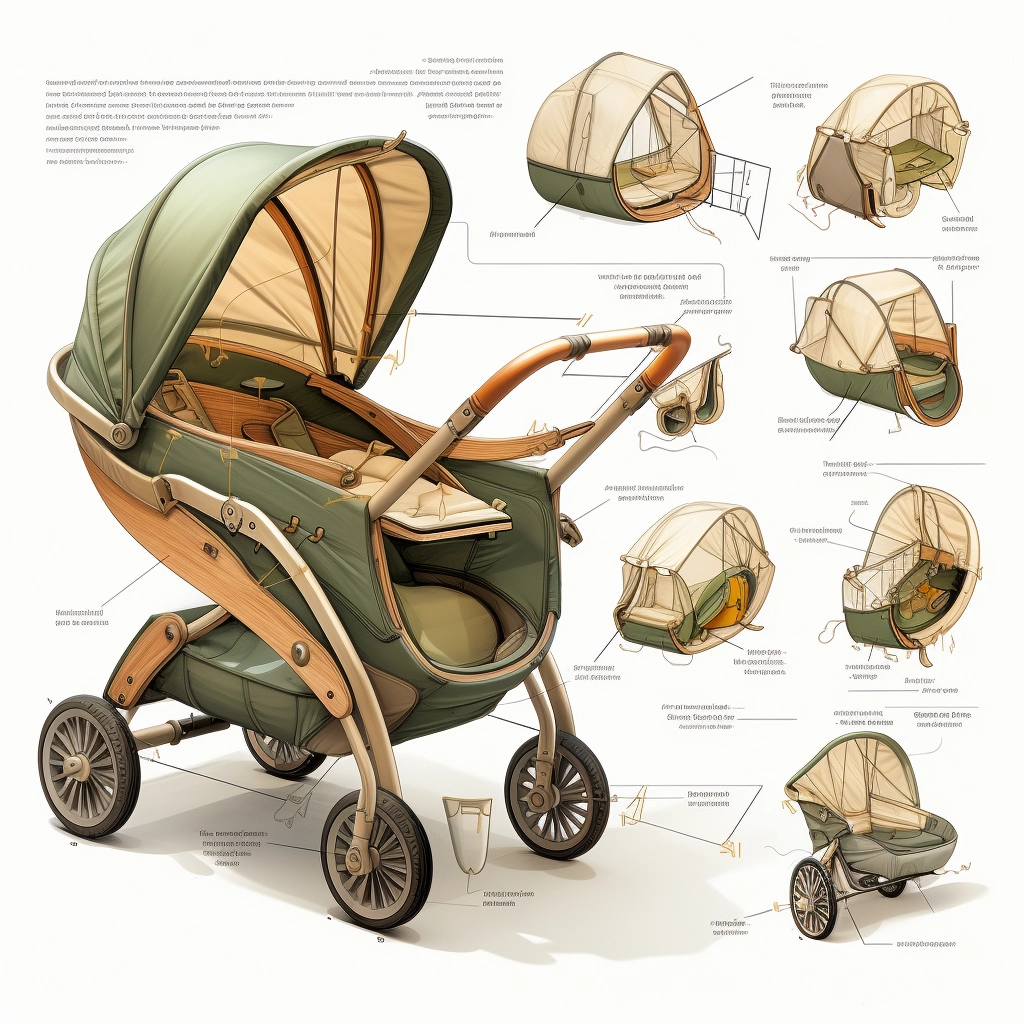
Conclusion
Midjourney in product design represents a holistic approach that blends creativity, user-centricity, and technical proficiency. By adopting such methodologies, companies can not only improve their product designs but also enhance overall user satisfaction and market relevance. As industries continue to evolve, approaches like Midjourney will become increasingly vital in driving innovation and success in product design.